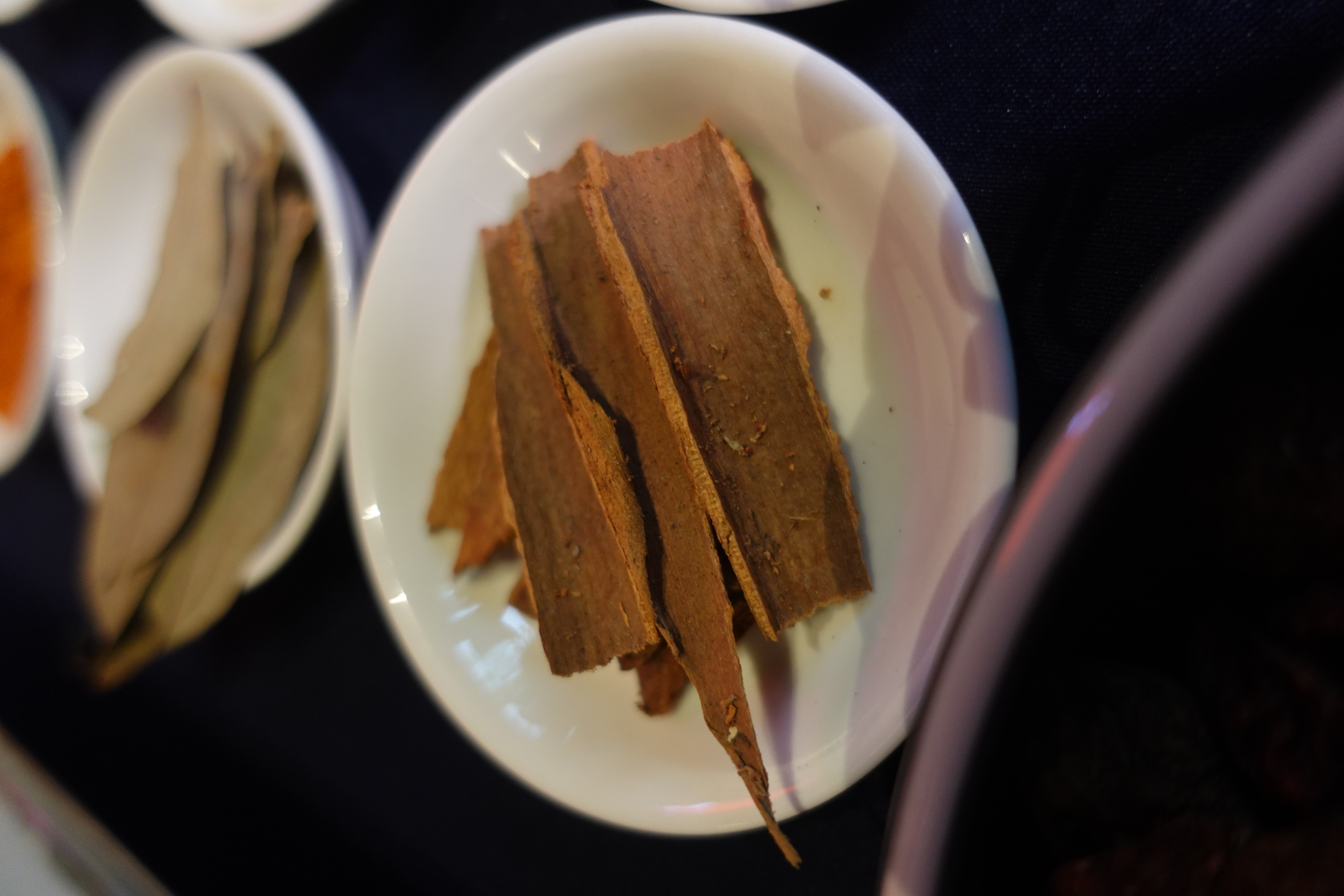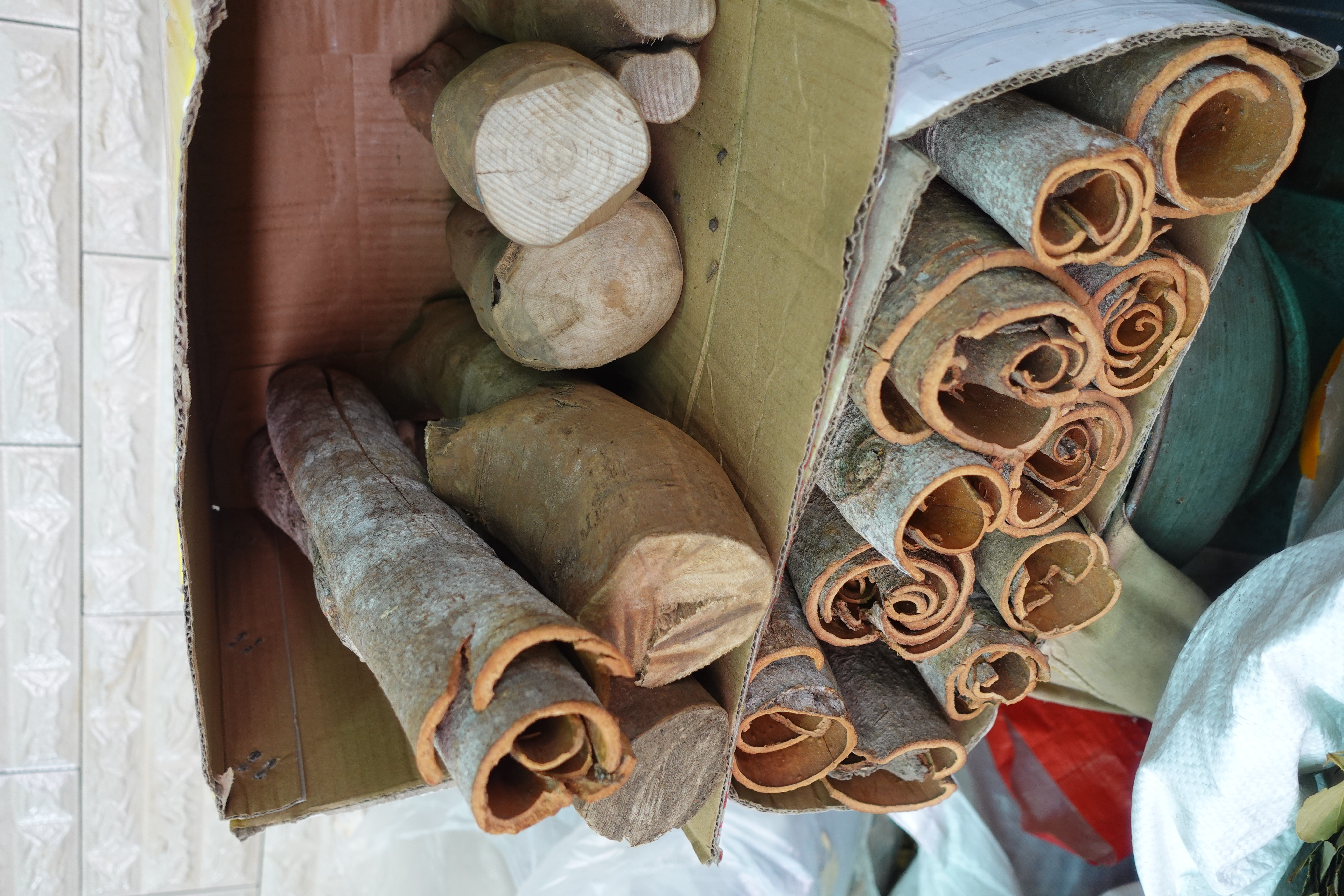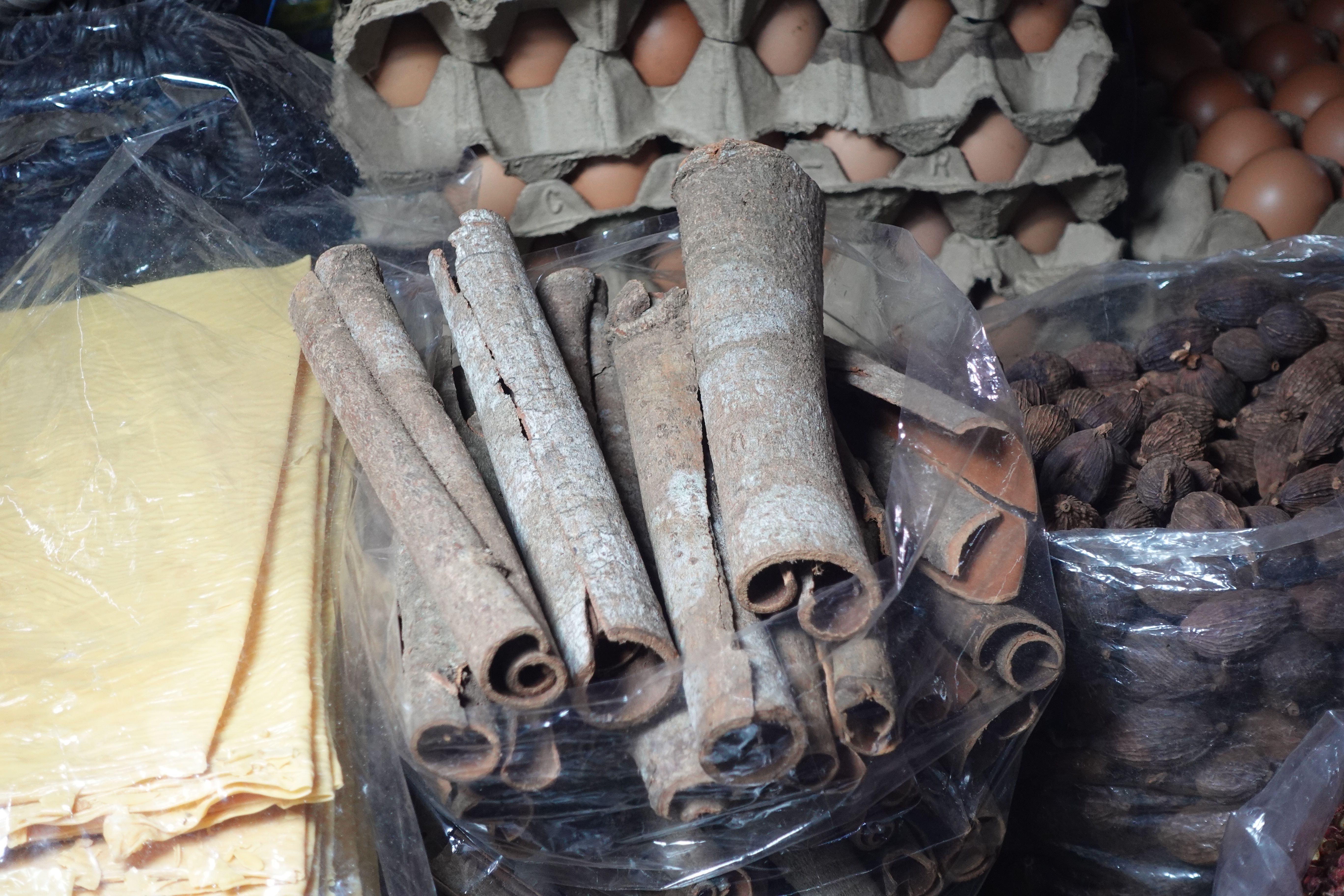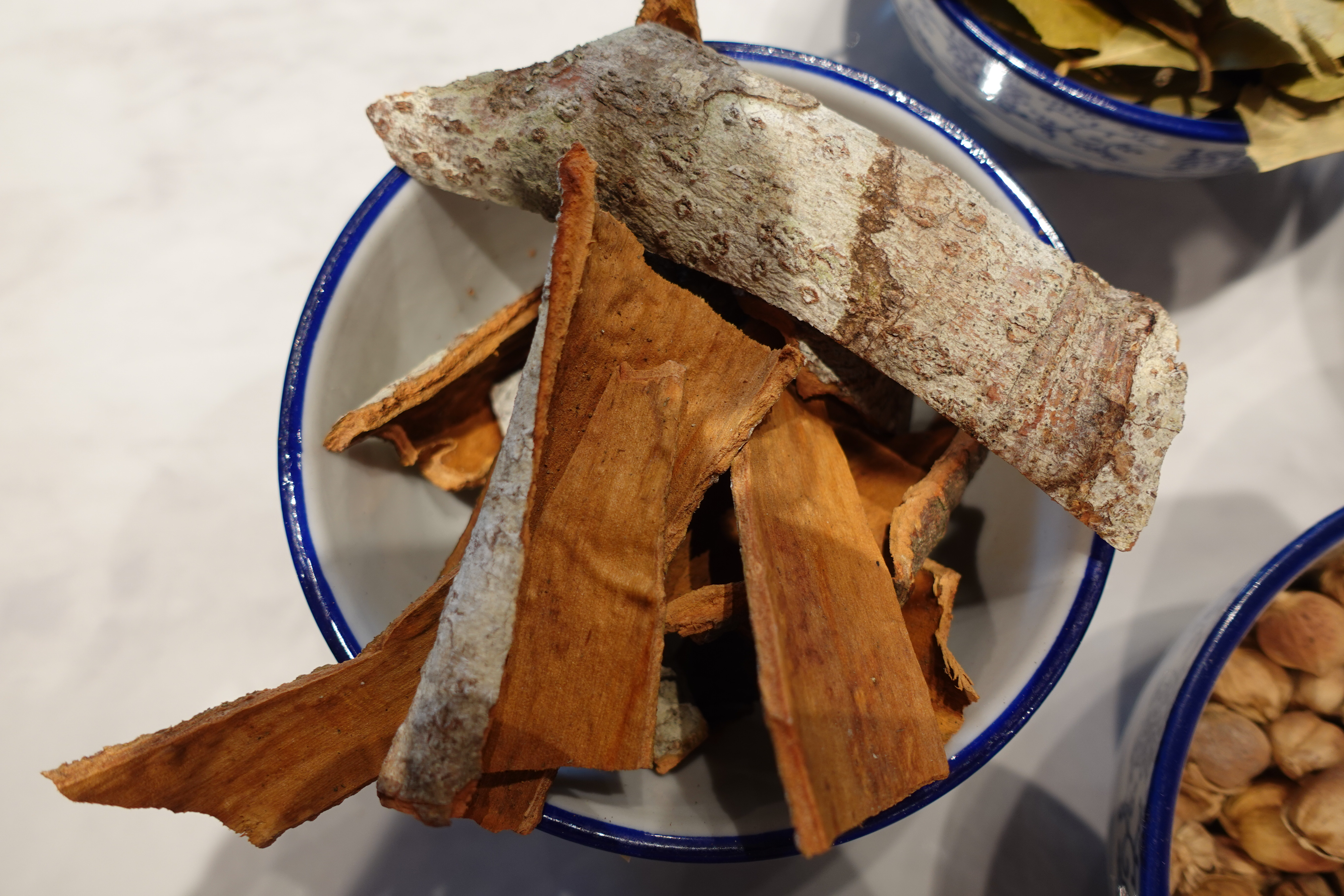
Flavor: Sweet/Pepery/Astringent
Major Flavour Compound: Cinnamaldehyde
Parts Used: Dried bark
Related species: Other species, including Cinnamomum loureiroi and C. burmannii, are also referred to as cassia cinnamon. However, C. cassia is the most commonly used species in China, Thailand, and Laos. In contrast, true cinnamon (C. verum), cultivated primarily in Sri Lanka, is more expensive and therefore less widely used.
“A robust bark spice defined by warmth, sweetness, and medicinal value.”
Cassia (Cinnamomum cassia) is a laurel-family spice closely related to true cinnamon and now supplies about half of the world’s “cinnamon.” Native to southern China and widely grown in Vietnam and Indonesia, it is distinguished by its dark, thick, coarse bark and bold flavor. Cassia’s sweetness and heat come from cinnamaldehyde, but high tannin and coumarin levels give it a more astringent, less nuanced profile than Ceylon cinnamon. Historically considered a common substitute, it is today favored for robust savory dishes and spice blends, where its strong warmth stands up to long cooking and rich meats.